
Friend, yesterday we talked about how a $12 AWS bill runs a $50k business. Today let's talk about why.
Think about the load on this newsletter builder:
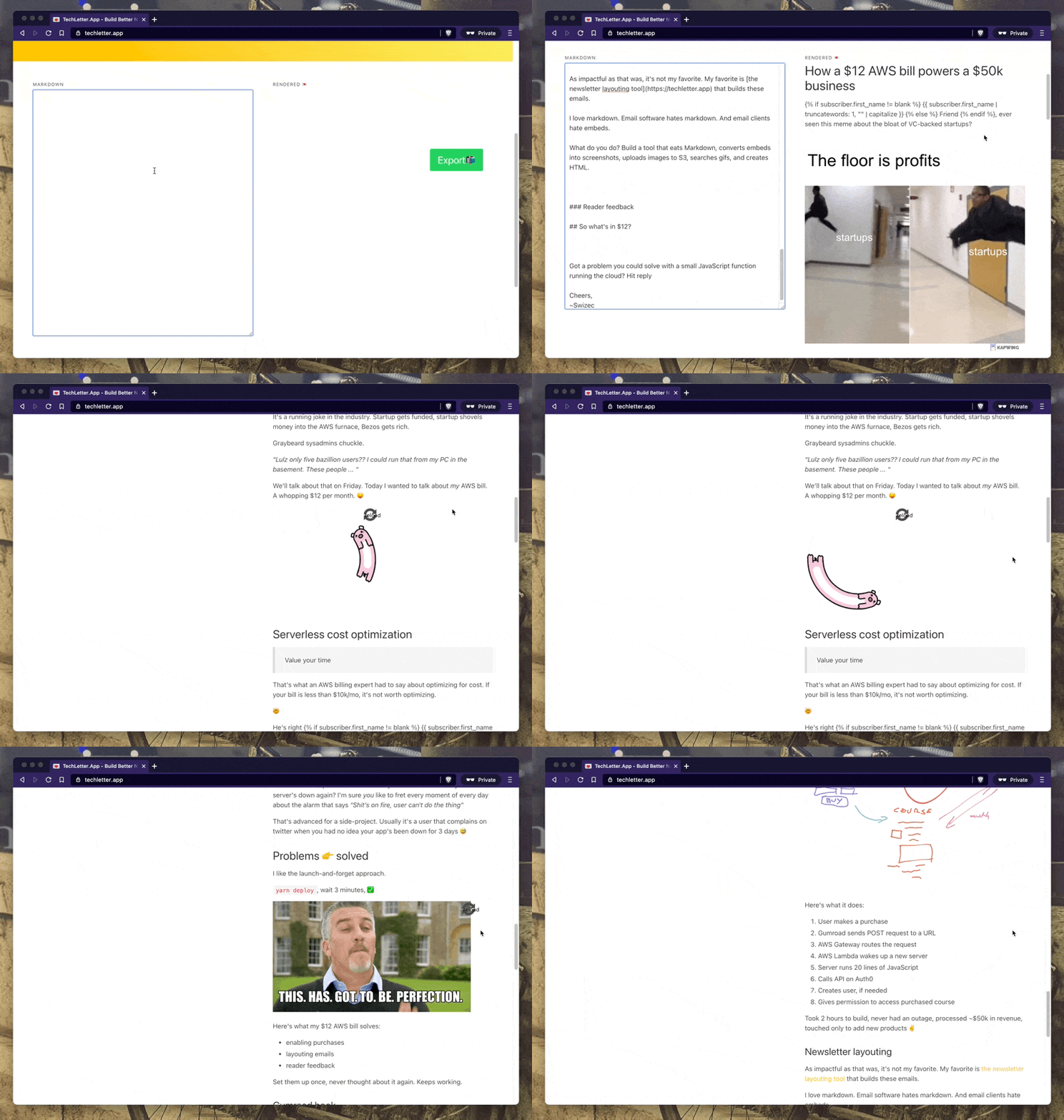
How do you think it works?
TechLetter.app architecture
The frontend for TechLetterApp is a create-react-app project. Nothing fancy. You can see the code on GitHub.
It runs on Vercel, using their git integration. git push origin master deploys new code in 2 minutes.
On the left, a <textarea> uses onChange callbacks to update values in global state. Shared via context in a cumbersome way because I was new to context 2 years ago. 😇
// MarkdownInput.jsexport default () => (<Consumer>{({ markdown, onChangeMarkdown }) => (<React.Fragment><Heading>Markdown</Heading><Textarea onChange={onChangeMarkdown} value={markdown} /></React.Fragment>)}</Consumer>)
Every change triggers a re-render of the LetterRender component. This detail is important.
// LetterRender.jsexport default React.forwardRef((props, ref) => {const { markdown } = useContext(MarkdownContext)const rendered = useRemark(markdown)return (<div ref={ref}><Heading>Rendered{" "}<span role="img" aria-label="face">{" "}💌</span></Heading><Content>{rendered}</Content></div>)})
Serverless Handbook for Frontend Engineers – free chapter
Dive modern backend. Understand any backend.
Serverless Handbook taught me high-leveled topics. I don't like recipe courses and these chapters helped me to feel like I'm not a total noob anymore.
The hand-drawn diagrams and high-leveled descriptions gave me the feeling that I don't have any critical "knowledge gaps" anymore.
~ Marek C, engineer
Start with a free chapter and email crash course ❤️
useRemark() turns markdown into React
See this line?
const rendered = useRemark(markdown)
That's the frontend secret sauce.
A compiler that takes Markdown and uses a chain of open source and custom remark plugins. One of the components it creates is called <Screenshot>.
// Screenshot.jsfunction Screenshot({ node }) {const [image, setImage] = useState(loaderImg)const reloadImage = async () => {setImage(loaderImg)try {const res = await fetch(node.url),response = await res.json()if (response.status === "success") {setImage(response.url)} else {throw "Screenshot error"}} catch (e) {setImage(errorImg)}}useEffect(() => {reloadImage()}, [node])// display image}
Screenshot is important 👉 makes an API request const res = await fetch(node.url) every time you sneeze.
Look at this:
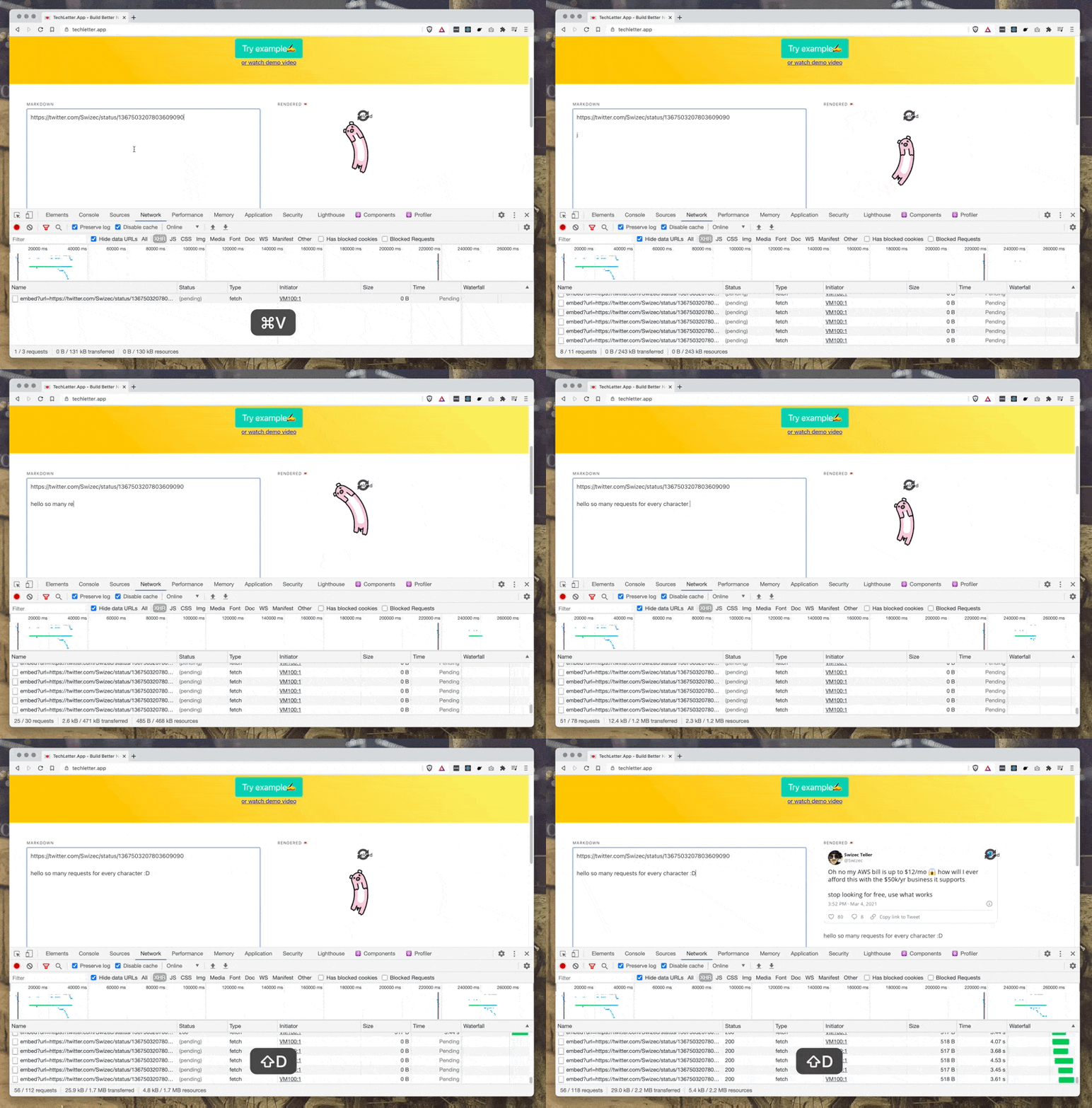
soooooo many requests, every character triggers a new one 😂
I knew it was bad, but I didn't realize it was that bad until I made this gif.
PS: it's because node changes object identity on every change. Effect should run on node.url.
A traffic pattern that kills your project
Every one of those requests talked to a server. The server had to:
- Run Chrome in headless mode without UI
- Load a special tweet embedder site running on Vercel
- Wait for the page to load
- Find the right DOM node
- Measure its size
- Take a screenshot
- Save to a temporary file
- Upload that file to S3
- Return the S3 link
Now imagine doing that 120 times while you type a sentence. Or 20 times all at once when you paste a document.
Server doesn't know you're bailing my friend, it finishes the full cycle every time. Yes my S3 is full of crap 😅
What do you think traffic looks like?
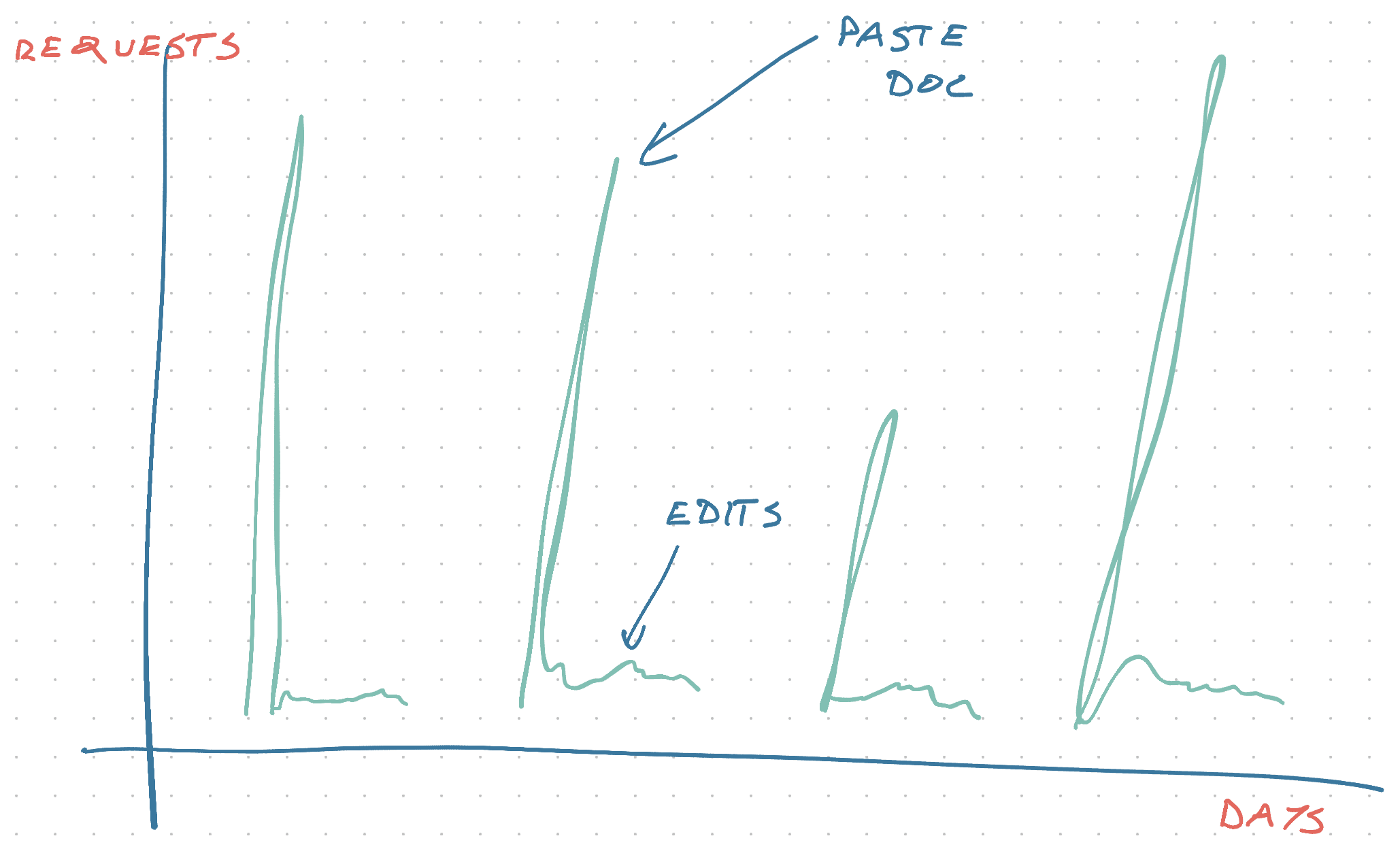
Days of nothing followed by a huge spike followed by lots of nothing. Your worst nightmare.
How many servers do you set up? 🤔
How serverless makes this work
Traffic like that is where serverless shines.
Google likes to call serverless architectures from prototype to production to planet-scale.
You don't want to use serverless at planet scale, but Google is right: Serverless scales. A lot.
With serverless, you don't need to think about traffic patterns and provisioning. Average load? Peak load? Lowest load? Auto-scaling? Who cares 🤷♀️
https://twitter.com/slobodan_/status/1369679609655083020
At rest, serverless does nothing. No requests, no server, no cost.
When ALL THE REQUESTS COME, serverless rallies the troops.

Each request creates a new server in milliseconds. Fastest I've seen was in the 20ms range for small functions. The screenshot lambda takes about half a second. Needs to run Chrome and Chrome is fat 🙃
You get up to 1000 of these in parallel on AWS. Other providers are different.
And I don't mean 1000 requests per second, oh no, I mean 1000 servers all at once. If your code takes 50ms to run, that's 50,000 requests per second. 🚀
Speed depends on what you're doing. Screenshots are slow.
What about traditional servers?
Now imagine TechLetterApp didn't have scale on demand ...
You have 2 options:
- Servers for average load – 2 requests per day 🤨
- Servers for peak load – 200 requests per minute 💸
Both suck.
A newsletter builder that can do 2 screenshots per day is useless. Takes you a week to build 1 email.
Scale to peak load of 200 per minute and you're throwing money in the furnace. Can you imagine the cost?
You end up with a middle ground: Enough servers to work okay but not great.
And that's how I kept crashing my friend's side project and nagging him on Slack every night while getting the Serverless Handbook print ready. He built a tool that takes markdown and turns it into a print PDF. Runs a render on every save.
It crashed. A lot. Shit's hard 😅
What do you think? Getting ideas yet? 😛 Hit reply
Cheers,
~Swizec
PS: there's a chapter in Serverless Handbook about using serverless chrome, it's one of my favs
Want to dive into serverless? Not sure where to begin?
Serverless Handbook was designed for people like you getting into backend programming.
360 pages, 19 chapters, 6 full projects, hand-drawn diagrams, beautiful chapter art, best-looking cover in tech. ✌️
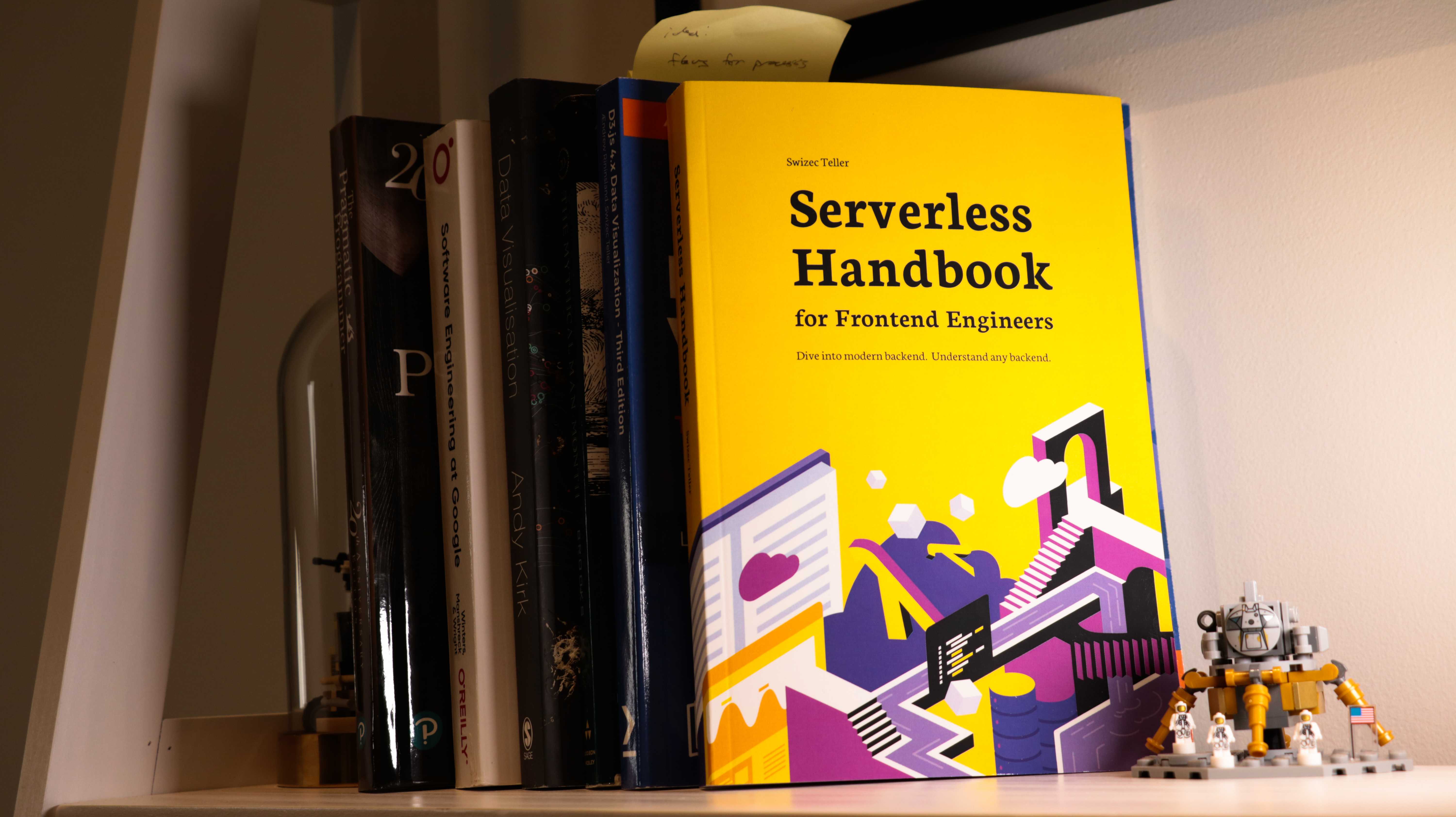
Learn how to choose the right database, write cloud functions, think about scalability, gain the architecture mindsets for robust systems, and more.
Leave your email to start with a free chapter and email crash course 👇
Serverless Handbook for Frontend Engineers – free chapter
Dive modern backend. Understand any backend.
Serverless Handbook taught me high-leveled topics. I don't like recipe courses and these chapters helped me to feel like I'm not a total noob anymore.
The hand-drawn diagrams and high-leveled descriptions gave me the feeling that I don't have any critical "knowledge gaps" anymore.
~ Marek C, engineer
Start with a free chapter and email crash course ❤️
Have a burning question that you think I can answer? I don't have all of the answers, but I have some! Hit me up on twitter or book a 30min ama for in-depth help.
Ready to Stop copy pasting D3 examples and create data visualizations of your own? Learn how to build scalable dataviz components your whole team can understand with React for Data Visualization
Curious about Serverless and the modern backend? Check out Serverless Handbook, modern backend for the frontend engineer.
Ready to learn how it all fits together and build a modern webapp from scratch? Learn how to launch a webapp and make your first 💰 on the side with ServerlessReact.Dev
Want to brush up on your modern JavaScript syntax? Check out my interactive cheatsheet: es6cheatsheet.com
By the way, just in case no one has told you it yet today: I love and appreciate you for who you are ❤️