
Support for Firebase Auth is one of the most requested features for useAuth and I figured what the heck, how hard can it be?
CodeWithSwiz is a weekly live show. Like a podcast with video and fun hacking. Focused on experiments. Join live Mondays
Friend, it can be very hard. Google docs are shit. The perfect example of For Engineers, By Engineers.
You find out everything that's possible. All the little trees, every detail. Want user/pass auth? Here's the code. Email link? Do this. OAuth with xyz provider? Here.
You know what they don't say?
How to set up fricken Firebase 😡
The setup
// Initialize the FirebaseUI Widget using Firebase.var ui = new firebaseui.auth.AuthUI(firebase.auth());
Ok Google, how do I import this? Where's my API key?
Is there Google magic afoot and they can guess? Ask me after initialization like the Netlify Identity widget can?
Nope.
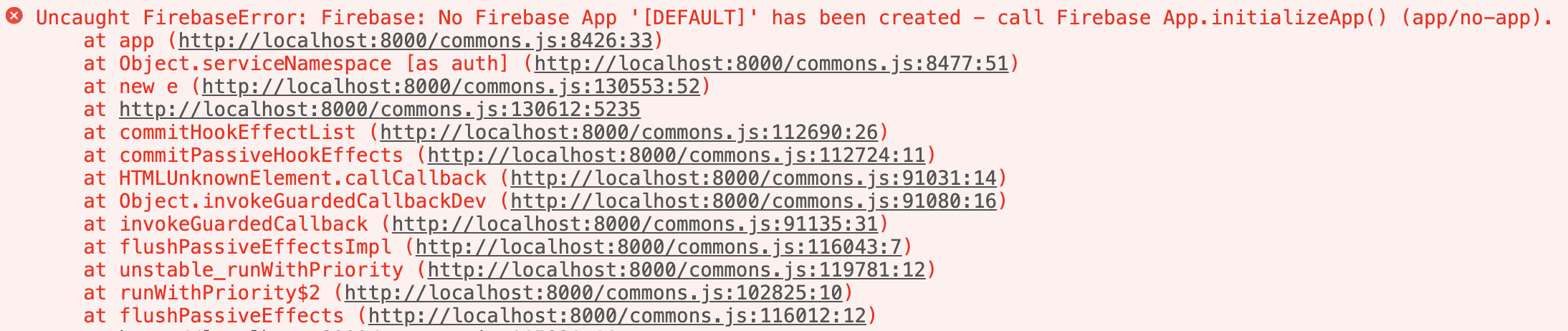
We later found the right docs to follow for initial setup. Even explains how to correctly import for a smaller bundle size.
pt2 will go swimmingly 💪
Creating an auth provider for useAuth
My favorite result of refactoring useAuth from React.Context to XState is that we can support multiple auth providers. Core logic is the same, details pluggable.
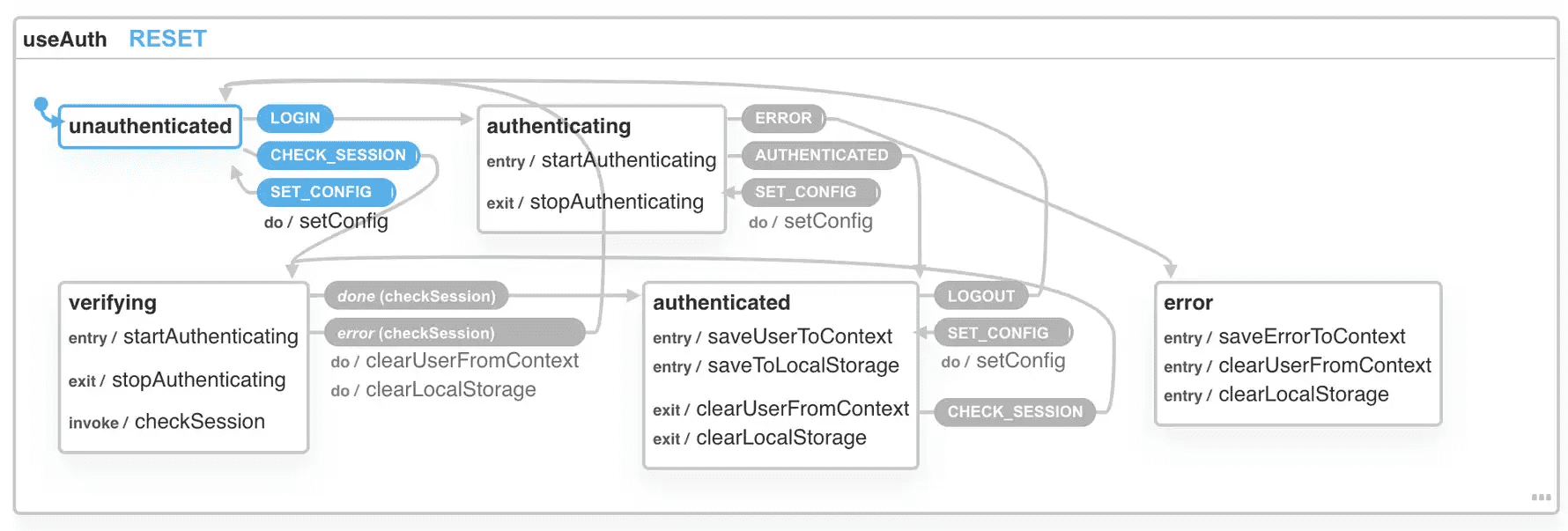
There's an abstraction layer and basic documentation on what to do. We're putting my docs to the test 😅
1. stub your provider
You start with copypasta of the abstract implementation.
// src/providers/YourThing.ts// Auth Wrapper for Auth0export class Auth0 implements AuthProviderClass {private auth0: Auth0Client.WebAuth;private dispatch: (eventName: string, eventData?: any) => void;// Auth0 specific, used for rolesprivate customPropertyNamespace?: string;// Initialize the client and save any custom configconstructor(params: AuthOptions) {// You will almost always need access to dispatchthis.dispatch = params.dispatch;// Auth0 specific, used for rolesthis.customPropertyNamespace = params.customPropertyNamespace;// Init your clientthis.auth0 = new Auth0Client.WebAuth({...(params as Auth0Options),});}// Makes configuration easier by guessing default optionsstatic addDefaultParams(params: ProviderOptions, callbackDomain: string) {const vals = params as Auth0Options;return {redirectUri: `${callbackDomain}/auth0_callback`,audience: `https://${vals.domain}/api/v2/`,responseType: "token id_token",scope: "openid profile email",...vals,};}public authorize() {// Open login dialog}public signup() {// Open signup dialog}public logout(returnTo?: string) {// Logs user out of the underlying service}public userId(user: Auth0UserProfile): string {// Return the userId from Auth0 shape of data}public userRoles(user: AuthUser): string[] | null {// Return user roles from Auth0 shape of data}public async handleLoginCallback(): Promise<boolean> {// Handle login data after redirect back from service// Dispatch ERROR on error// Dispatch AUTHENTICATED on success// include the user object and authResult with at least an expiresIn value}public async checkSession(): Promise<{user: Auth0UserProfile;authResult: Auth0DecodedHash;}> {// verify session is still valid// return fresh user info}}
2. fill abstract implementation
Fill in those methods to fit your auth provider. Here's what we tried for Firebase Auth. Don't know yet if it works.
// src/providers/FirebaseUI.tsconstructor(params: AuthOptions) {// You will almost always need access to dispatchthis.dispatch = params.dispatch;// Init your clientthis.ui = new FirebaseAuthUI.AuthUI(firebase.auth());}public authorize() {// Open login dialogthis.ui.start("#firebaseui-auth-container", {signInOptions: [firebase.auth.EmailAuthProvider.PROVIDER_ID]});}
Don't quote me on that yet :)
3. use the provider
Use in your app. We created a Gatsby-based example on stream
// gatsby-browser.jsexport const wrapRootElement = ({ element }) => (<ThemeProvider theme={theme}><AuthConfigauthProvider={FirebaseUI}navigate={navigate}params={{/* ... */}}/>{element}</ThemeProvider>);
Render <AuthConfig> and provide the new auth provider. We don't know yet which params Firebase Auth is going to use. Find out next time :)
4. contribute to useAuth 🙏🏻
To contribute the FirebaseUI auth provider to the core library we needed an extra step 👉 adding it to the library.
That happens in package.json:
"source": ["src/providers/auth0.ts","src/providers/NetlifyIdentity.ts","src/providers/FirebaseUI.ts","src/index.ts"],// ..."files": ["src","dist","auth0.js","netlify-identity.js","firebase-ui.js"],
The "source" config tells microbundle to build FirebaseUI.ts as its own library. Creates a bunch of files in dist/* that aren't connected with the rest.
The "files" config tells NPM to keep ./firebase-ui.js when publishing. That file is a hack.
// ./firebase-ui.js// this is a hack to improve DX// TODO: figure out a better wayconst { FirebaseUI } = require("./dist/FirebaseUI");module.exports = { FirebaseUI };
Only way I could find to:
- Reduce bundle size and let you use different providers without installing all of them
- Have understandable imports like
import FirebaseUI from "react-use-auth/firebase-ui"
If you know a better way please hit reply.
In conclusion
Understanding beats knowledge. Knowing how several details of Firebase work, does not mean you can make it fit together.
Keep that in mind next time you write docs for your team.
Cheers,
~Swizec
PS: it's beyond cool that TypeScript lets you define "An auth provider must conform to this API" and enforces it at the compiler level. Makes this way easier 😍
Learned something new?
Want to become a high value JavaScript expert?
Here's how it works 👇
Leave your email and I'll send you an Interactive Modern JavaScript Cheatsheet 📖right away. After that you'll get thoughtfully written emails every week about React, JavaScript, and your career. Lessons learned over my 20 years in the industry working with companies ranging from tiny startups to Fortune5 behemoths.
Start with an interactive cheatsheet 📖
Then get thoughtful letters 💌 on mindsets, tactics, and technical skills for your career.
"Man, love your simple writing! Yours is the only email I open from marketers and only blog that I give a fuck to read & scroll till the end. And wow always take away lessons with me. Inspiring! And very relatable. 👌"
Have a burning question that you think I can answer? I don't have all of the answers, but I have some! Hit me up on twitter or book a 30min ama for in-depth help.
Ready to Stop copy pasting D3 examples and create data visualizations of your own? Learn how to build scalable dataviz components your whole team can understand with React for Data Visualization
Curious about Serverless and the modern backend? Check out Serverless Handbook, modern backend for the frontend engineer.
Ready to learn how it all fits together and build a modern webapp from scratch? Learn how to launch a webapp and make your first 💰 on the side with ServerlessReact.Dev
Want to brush up on your modern JavaScript syntax? Check out my interactive cheatsheet: es6cheatsheet.com
By the way, just in case no one has told you it yet today: I love and appreciate you for who you are ❤️